Why is the Leafless Amarbel both a Curse and a Cure in India and Nepal?

Why is the Leafless Amarbel both a Curse and a Cure in India and Nepal?

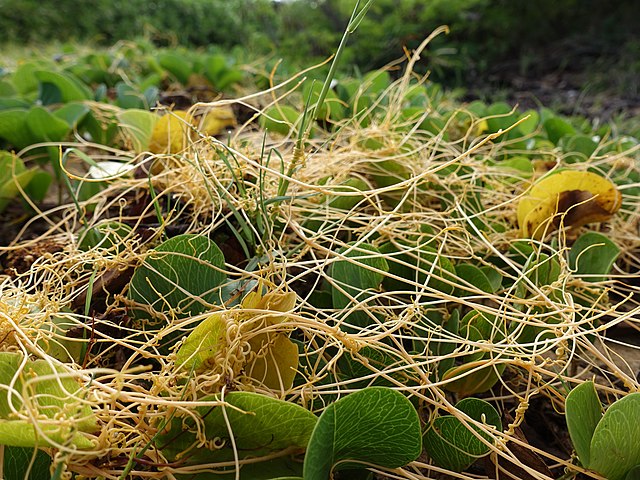
In the lush forests and landscapes of India and Nepal, a strange golden vine exists that possesses no leaves and no roots of its own. Known in the world of botany as Cuscuta reflexa and commonly called Amarbel, this plant does not produce its own food. Instead, it survives by stealing nutrients from other trees. It is a completely parasitic plant that wraps itself tightly around a host tree. Through this article, we will understand how this unique plant uses specialized cells to draw nutrition from other vegetation. We will also explore its historical importance and its use in ancient Ayurvedic texts and folk medicine. Furthermore, we will see how this vine connects the cultures, myths, and agriculture of India and Nepal.

How does this leafless plant steal its food?
The survival method of Amarbel is nothing short of a botanical wonder. Since it lacks leaves, it depends entirely on other green trees to stay alive. According to scientific databases, once Amarbel attaches itself to the stem of a host tree, it develops special piercing cells called haustoria. These microscopic cells penetrate deep into the tissues of the host plant. Once these cells establish a connection inside the tree, Amarbel ruthlessly begins to suck out all the essential nutrition and food. This unique cellular structure is exactly what allows this parasite to steal food from other trees and dominate them.

What do the folk traditions of India and Nepal say about this vine?
Beyond science, the golden and endless web like structure of Amarbel has always been a subject of wonder for local people. There are many deep cultural beliefs and myths associated with this plant across the landscapes of India and Nepal. In local folklore, its never ending nature and its habit of completely gripping trees are seen as symbols of magical entanglement. The way this vine embraces trees is viewed as a mysterious power in local myths. In the cultural traditions of these two countries, Amarbel is not just a plant but a living example of eternal entanglements.

What is its history in ancient Ayurveda and folk medicine?
Although this vine is a dangerous parasite for other trees, it has been a very important medicine for humans for centuries. In the history of ancient Ayurvedic texts and folk medicine in India and Nepal, Amarbel is described as having rich significance. For generations, traditional healers and practitioners in both countries have been using extracts of this vine to treat various diseases. Research papers describe the historical importance of its human use in detail. In folk medicine, it is considered a precious gift from nature that has the immense potential to remove internal weaknesses and health related problems.

How do traditional healers use it for skin diseases?
The most prominent and traditional use of Amarbel is in the treatment of serious skin related issues. According to authentic research, many medicinal values are found in this vine that are very effective in curing skin disorders. Traditional rural healers treat skin diseases by grinding Amarbel and extracting its juice. Its extract works like a miraculous natural medicine to soothe harsh skin conditions. For generations, people in rural areas have placed deep trust in the therapeutic potential of this golden vine for skin care and natural healing.
 

File:Dodder (Cuscuta sp.) - 21659038509.jpg

How effective is this vine against serious liver diseases?
Modern medical science has also now confirmed the traditional uses of Amarbel that ancient healers practiced for centuries. A highly authentic medical study has proven that the extract of this parasitic vine is a very effective treatment for various serious liver conditions. When the human liver becomes weak due to toxins or other diseases, medicines prepared from Amarbel play a vital role in restoring liver health. This unfailing medicinal capacity to protect a vital organ like the liver makes this vine an extremely valuable plant for the modern medical world as well.

What is its significance in the environment and traditional healing?
Well known publications focused on environment and science have also highlighted how this ancient parasitic vine is miraculous for healing. Its mysterious medicinal properties, used in traditional treatments for centuries, are very powerful. Environmentalists and researchers believe that the healing qualities of this vine hold great value in the field of traditional medicine. This plant is living proof of how nature has secured many medicinal solutions for humans even within a parasitic organism.

Is this plant a dangerous weed or a vital part of the ecosystem?
While it is a blessing in the field of medicine, this golden Amarbel is also a major headache in the world of agriculture. According to agricultural reports, farmers in India and Nepal consider this vine a highly destructive weed. Since it spreads very rapidly over crops and trees and sucks out all their nutrition, farmers constantly struggle to manage it and protect their harvests from its impact. However, on the other hand, scientists are also studying its broad ecological footprint. In its native tropical habitats, scientists are trying to understand the secret role this vine plays in keeping the ecosystem balanced despite being a destructive weed.

Sources:
https://tinyurl.com/22pbbcz4
https://tinyurl.com/29go373l
https://tinyurl.com/26y8s2x6
https://tinyurl.com/2ddz8sob
https://tinyurl.com/2942p3tb
https://tinyurl.com/26qberdz
https://tinyurl.com/2danhwg4 

By Cell Type
bilateral